
Web Design8 min readMay 20, 2026
Why Your Website Isn't Generating Leads (And How to Fix It)

26
LET'S CONNECT
Free website audit — on us.
Book a call and we'll map out quick wins plus a plan to turn your site into a growth engine.

Book a call and we'll map out quick wins plus a plan to turn your site into a growth engine.
Your website looks professional. You spent real money on it. But leads? Barely any — or none at all. This is the most common complaint I hear from service business owners: traffic shows up in Google Analytics, and nothing converts. It isn't a visibility problem. It's a conversion architecture problem — and most of the causes are fixable without rebuilding everything from scratch.
Here are the five most common reasons service business websites fail to generate leads, and what to fix first.
In 2025, Ruler Analytics tracked over 100 million data points across 14 industries and found the all-industry average website conversion rate — a qualified lead who has shown genuine interest — sits at 3.3%. Professional services convert highest at around 4.6%. B2B ecommerce sits near the bottom at 1.1%.
If your service business website converts under 1% of visitors into contacts, you don't have a traffic problem. You have a conversion architecture problem.
“Built to convert” means something specific: every page has one clear next step, the value proposition is obvious within five seconds of landing, and there are enough trust signals that a first-time visitor actually believes you can solve their problem. Most small business sites fail on all three — and the fixes are rarely as extensive as a full redesign.
See how Studio Nosa approaches conversion-first web design.
Here's a question worth sitting with: when someone lands on your homepage right now, what's the single most important thing they should do?
If the answer isn't immediately obvious — three competing CTAs, a hero section that opens with your company history — you've already lost most of them. Research published in Behaviour & Information Technology (Lindgaard et al., 2006) found that visitors form a visual impression of a website in as little as 50 milliseconds. They decide whether you can help them within the first five seconds of landing. Lead with who you are instead of what you do for them, and most visitors leave before reading a line of copy.
The fix isn't clever copy. It's clarity: one headline, one subheadline, one call to action — above the fold, every time.
Studies show CTAs placed above the fold significantly outperform those buried below it, with some A/B test analyses showing differences exceeding 300%. The reasoning is simple: visitors shouldn't have to scroll to find out how to contact you. If your primary conversion action requires effort to find, most people won't bother.
The most common CTA mistakes on service business sites:
One primary CTA in your hero section, with button copy that names the outcome. Remove secondary CTAs from above the fold. Let visitors focus on one decision.
See how Studio Nosa structures web design for service businesses — CTA architecture is one of the first things we get right.

of consumers say online reviews influence their purchasing decisions
BrightLocal — Local Consumer Review Survey, 2025
A foundational study from Stanford's Persuasive Technology Lab found that 46.1% of consumers assess a website's credibility based on visual design elements — layout, typography, color — before they read a word of content. Combined with the BrightLocal figure above, the picture is clear: visitors are credibility-screening your site before deciding whether to trust you enough to fill out a form.
What's almost always missing on service business sites:
Trust signals aren't decoration. They're doing active conversion work. If yours are buried or absent, adding them is likely your highest-leverage move before touching anything else. See the results we've produced for real clients.
Google's research, published via Think with Google, is unambiguous: as mobile page load time increases from 1 second to 3 seconds, bounce probability increases by 32%. From 1 to 5 seconds, it jumps 90%. At 10 seconds, it's +123%. This isn't a technical issue — it's a lead volume issue. Every visitor who bounces before the page loads is a lead that never had a chance to convert.
The fastest way to check: visit Google PageSpeed Insights, enter your URL, and run the mobile test. A score under 70 is actively costing you leads. Under 50 is urgent — fix this before running any paid traffic.
Common culprits for slow service business sites:
You don't need to understand the mechanics. But your developer does. If your mobile PageSpeed score is under 70, a performance audit should come before any new investment in paid traffic.
of users have abandoned an online form after starting to fill it out
The Manifest — Form Abandonment Consumer Survey
Most service business sites make this worse — asking for company size, project budget, timeline, and additional fields before the prospect has any reason to trust you. HubSpot's own testing found that reducing a form from 4 fields to 3 increased conversions by nearly 50%. More fields means more abandonment, not more qualified leads.
Think about the in-person equivalent: you wouldn't hand a new client a 12-field questionnaire the moment they walked through the door. You'd ask their name, what they need, and how to reach them. Your contact form should do the same.
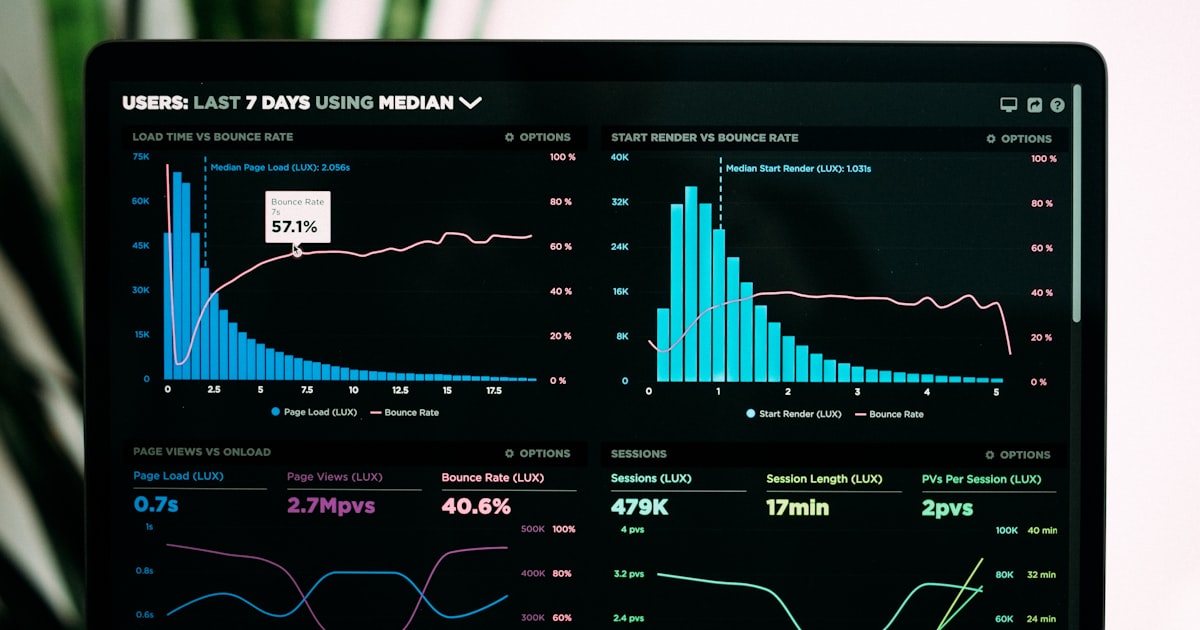
You don't need an agency to run an initial diagnostic. These five checks will tell you exactly where the problem is:
The 5-second test
Show your homepage to someone who has never seen it. Ask: what does this business do, who do they serve, and what should I do next? If they can't answer all three in five seconds, your hero section needs work.
CTA count above the fold
How many calls to action appear before the first scroll? More than one primary CTA creates hesitation. Cut to the strongest one.
Trust signal check
Is there at least one testimonial, client result, or project outcome visible without scrolling? If it's buried or absent entirely, move it up.
Mobile PageSpeed score
Run your URL through Google PageSpeed Insights on mobile. Score under 70 = fix before running ads. Under 50 = urgent.
Form field count
How many fields are on your primary contact form? More than four is friction. Cut it to three.
If two or more checks fail, you've found where your leads are disappearing. Fix the highest-priority issue first — usually CTA clarity or trust signals — measure it, then move to the next.
If you want a professional audit, that's where we start.
Work with Studio Nosa
Getting leads from your site isn't about rebuilding everything. It's about fixing the right things in the right order. We audit underperforming sites and rebuild the conversion architecture — so your existing traffic starts turning into inbound business.
See How We Build Sites That Convert →Question
Why is my website getting traffic but no leads?
Traffic without leads almost always comes down to one of four issues: no clear CTA above the fold, missing trust signals, slow mobile load times, or a contact form with too much friction. Start with the 5-second test — show your homepage to someone unfamiliar with your business and ask if they can identify what you do and what to do next. The answer usually points directly to the fix.
Question
How long does it take to see results after fixing conversion issues?
Most conversion changes show measurable impact within two to four weeks of consistent traffic, since they affect every visitor from the moment the change goes live. Page speed improvements tend to show results faster — they reduce bounce rates immediately and affect every page on the site, not just the homepage.
Question
Do I need to rebuild my website to improve lead generation?
Rarely. In our experience, 80% of conversion improvements come from four targeted changes: a clearer hero headline, a stronger above-the-fold CTA, moving social proof higher on the page, and simplifying the contact form. A full rebuild makes sense when the site's underlying structure is the problem — not just the conversion elements on top of it.
Question
What's a realistic conversion rate for a service business website?
For a well-optimized service business site, 3–5% is a realistic and achievable goal. The all-industry average is 3.3% (Ruler Analytics, 2025), with professional services topping out around 4.6%. If you're currently below 1%, focus on the basics — CTA clarity, trust signals, mobile performance — before investing in paid traffic. More traffic through a leaky funnel just means more wasted spend.
Most service business websites aren't broken. They're just not built for conversion. The fixes are rarely dramatic: a clearer headline, a testimonial moved above the fold, a form trimmed from eight fields to three. These changes compound quickly when applied to every visitor who already lands on your site.
Run the five-check audit above. Fix the highest-priority failure first. Measure it. Then move to the next one. If you want a second set of eyes on what's specifically holding your site back, that's exactly what we do.
Sources
Ruler Analytics, “Average Conversion Rate by Industry and Marketing Source 2025,” retrieved 2026-05-23, ruleranalytics.com
Google / Think with Google, “New Industry Benchmarks for Mobile Page Speed,” 2017, thinkwithgoogle.com
BrightLocal, “Local Consumer Review Survey 2025,” retrieved 2026-05-23, brightlocal.com
Fogg, B.J. et al., Stanford Persuasive Technology Lab, “Stanford-Makovsky Web Credibility Study 2002,” credibility.stanford.edu
Lindgaard, G. et al., “Attention web designers: You have 50 milliseconds to make a good first impression,” Behaviour & Information Technology, Vol. 25, No. 2, 2006, tandfonline.com
HubSpot, “3 Form Fields That Kill Landing Page Conversions,” retrieved 2026-05-23, blog.hubspot.com
The Manifest, form abandonment consumer survey, cited via Formstory, formstory.io