Web Design8 min readMay 27, 2026
Web Design for Creative Agencies & Video Production Companies


26
LET'S CONNECT
Free website audit — on us.
Book a call and we'll map out quick wins plus a plan to turn your site into a growth engine.

Book a call and we'll map out quick wins plus a plan to turn your site into a growth engine.
When a potential client is deciding which production company to hire, they don't ask around first. They Google you. They land on your site. They spend about thirty seconds deciding whether your work is at the level they need — and whether you're worth a conversation.
For creative agencies and video production companies, the website isn't a formality. It's the portfolio, the pitch deck, and the first impression at the same time. This guide covers what actually works: what clients look for, where most creative agency sites fail, and the principles we've applied building production company websites that convert creative interest into real inquiries.
Key Takeaways

Most service businesses can get away with a competent website. A clear headline, a few service descriptions, some social proof, a contact form. That's enough to move the needle. Creative agencies don't have that luxury.
When someone hires a production company, they're entrusting you with visual work that will represent their brand. Before they do that, they're going to evaluate your visual taste — starting with your own site. In 2002, the Stanford Web Credibility Project found that 46.1% of trust assessments were driven by visual design alone. For a production company, that number is probably higher. Your clients are buying your eye. If your website doesn't demonstrate that eye, you're undermined before the conversation starts.
of businesses now use video as a marketing tool — making your clients more video-literate, and more demanding, than ever
Wyzowl State of Video Marketing, 2025
The pattern is consistent across creative industries: studios that have produced genuinely exceptional work are represented by websites that feel generic, slow, or disconnected from the quality they deliver. The gap between what they've made and how that shows online is exactly where they lose clients to competitors whose work isn't necessarily better — just better presented.
Think with Google found that 70% of B2B buyers watch video throughout their purchase decision process. Your prospective clients aren't passive about video — they understand it, they use it, and they know the difference between good and average work. What they're looking for on your site falls into four categories:
01.Work that looks like theirs
Clients hire studios whose existing work resembles what they want to make. A portfolio organized by industry or content type helps them self-select quickly. A single reel that mixes corporate testimonials, fashion films, and event recap videos with no organization forces the client to do the categorizing themselves — and most won't.
02.Social proof that's specific
A quote from a client that says 'great team to work with' does nothing. A quote from a marketing director at a named brand that says 'they delivered a 90-second product launch film in 10 days that drove a 40% increase in social engagement' — that moves a decision. Name brands matter. Specific outcomes matter more.
03.Clear scope of services
Do you shoot and edit? Do you handle scripting and concept? Do you do motion graphics and animation? Many production companies are vague about where their scope ends, which creates friction in early conversations. Clients want to know what they're getting before they reach out.
04.A contact path that isn't buried
Creative agencies are notorious for building beautiful sites where the inquiry path is nearly impossible to find. The contact button should be in the nav, above the fold, and at the bottom of every project page. Don't make a client work to give you money.
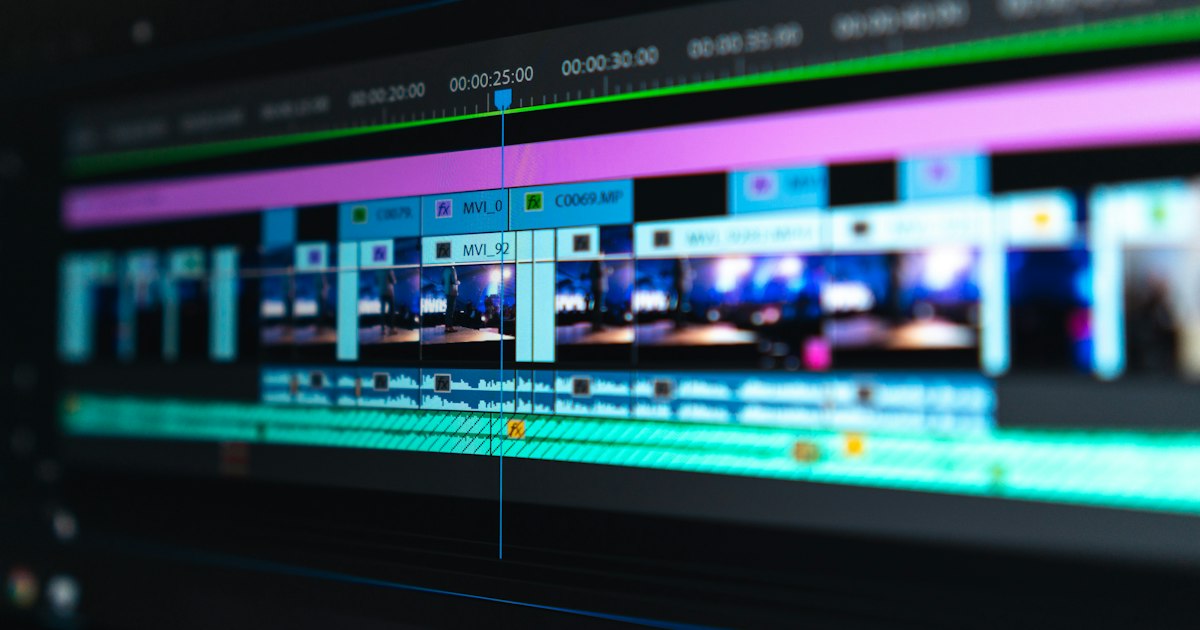
Production companies want their work front and center. That's right. The problem is that video-heavy, image-heavy creative sites are the most prone to the performance issues that kill conversions. Portent's 2023 analysis found that sites loading in 1 second convert 3x better than those loading in 5 seconds. Google's Core Web Vitals data from 2024 shows that only 43% of sites pass all three CWV thresholds on mobile.
For a production company, this creates a real tension: you want to lead with rich visual content, but that same content can drag load times to the point where visitors bounce before they see it. The solution isn't stripping the site down — it's engineering it properly. Lazy-loading off-screen images, using next-gen formats (WebP, AVIF), hosting video on external CDNs (Vimeo, YouTube) rather than self-hosting, and compressing without visible quality loss. A well-built creative agency site can be visually rich and still hit sub-2-second load times.
of websites pass all Core Web Vitals on mobile — meaning more than half of creative agency sites are losing rankings and conversions to performance issues
Google Core Web Vitals / CrUX Report, 2024
When QN Productions came to us, they had a genuine problem: their actual work was excellent, but their online presence didn't reflect it. The portfolio was scattered across platforms. The site was slow under the weight of unoptimized video. There was no clear narrative around individual projects — just visuals without context. And the inquiry path wasn't obvious.
We rebuilt it as a visual-first experience that loads fast. The portfolio structure was redesigned for quick browsing with enough depth per project to tell the full story. Performance-aware media handling kept load times low despite the richness of the content. And the inquiry flow was simplified to a single, clear CTA placement throughout.
The technical results: 10ms Total Blocking Time, 96/100 Accessibility score, 0 Cumulative Layout Shift — on a visually complex, media-heavy site. That's what performance-first engineering buys you. See the full QN Productions project →

After building sites for production companies and creative agencies at Studio Nosa, five elements consistently separate the sites that generate consistent inbound from those that look great but convert quietly:
01.Portfolio organized by what clients search for
Category-first navigation (by industry, content type, or platform) lets prospects self-sort into the right examples immediately. A single undifferentiated reel is a missed opportunity to show depth across use cases.
02.Project pages with context, not just visuals
The brief, the challenge, the deliverables, the outcome. Clients want to understand how you think, not just what you produce. A project page with a 3-minute reel and no context is a brochure; a project page that explains the brief and outcome is a case study.
03.Performance-aware media handling
Video hosted on Vimeo or YouTube, not self-hosted. Images in WebP or AVIF. Lazy loading on everything below the fold. The goal is a site that feels as rich as the work — without the load time that kills the impression before it lands.
04.Social proof that names names
Brand logos from past clients carry far more weight than anonymous testimonials. If you've worked with recognizable brands, surface them. If you haven't yet, named individuals with titles and companies are the next best thing.
05.A clear, frictionless inquiry flow
One form. Asking for: project type, rough timeline, and contact info. That's enough to qualify a lead and schedule a discovery call. Creative agencies routinely overbuild their intake forms and underinvest in making the contact button easy to find.
Building a creative agency or production company website?
We design and build production company sites that perform as well as they look — fast, visual, and built to convert creative interest into real inquiries.
View Our Services →Question
How important is page speed for a video production company website?
More important than most creative agencies realize. Portent's 2023 research found that sites loading in 1 second convert 3x better than those loading in 5 seconds. For production companies with video-heavy portfolios, page speed is often the single biggest gap between a site that looks great and one that actually generates inquiries. The fix isn't removing video — it's hosting it correctly and engineering the rest of the site for performance.
Question
Should a production company use a reel or individual project pages?
Both, but for different purposes. A reel works for initial impression and at the top of the homepage — it establishes range and quality quickly. Individual project pages work for decision-making: they let a client see whether you've handled their specific type of project before, understand your process, and read real outcomes. The studios that convert best use a short reel to hook and project pages to close.
Question
What platform is best for a creative agency website?
Webflow is the most common fit for creative agencies and production companies: it allows fully custom design without the constraints of a template, handles CMS collections for portfolio organization, and produces clean code that performs well. Next.js is the right call when custom functionality or headless CMS is needed. Squarespace and WordPress themes tend to cap out quickly for studios that want pixel-level control over how their work is presented.
Question
How long does a production company website take to build?
A properly designed creative agency site — custom layout, organized portfolio structure, performance-optimized media — typically takes 6–10 weeks from kickoff to launch. The most common delay is content: production companies often have the work but not the organized project descriptions, client approvals, or written case studies that turn a visual gallery into a persuasive portfolio.
Creative agencies are evaluated visually before anything else. Your website is the first demonstration of your taste, your craft, and your ability to handle a brief. A site that loads slowly, organizes work poorly, or buries the contact path is telling potential clients something about the experience of working with you — even if it's not what you intend.
The production companies that consistently win new business online have sites that match the quality of what they make: fast, considered, organized, and easy to act on. If your site doesn't reflect your work, that's the gap worth closing.
Sources
Wyzowl, “State of Video Marketing 2025,” 2025, retrieved 2026-05-26, wyzowl.com
Fogg, B.J. et al., Stanford Persuasive Technology Lab, “How Do People Evaluate a Web Site’s Credibility?” 2002 (n=2,684), credibility.stanford.edu
Think with Google, “How Video Influences Purchase Decisions,” retrieved 2026-05-26, thinkwithgoogle.com
Portent, “Site Speed is Still Impacting Your Conversion Rate,” 2023, retrieved 2026-05-26, portent.com
Google, Core Web Vitals Technology Report (CrUX), 2024, retrieved 2026-05-26, developer.chrome.com