
SEO7 min readMay 24, 2026
What Is Technical SEO and Why Does It Matter for Small Businesses?



26
LET'S CONNECT
Free website audit — on us.
Book a call and we'll map out quick wins plus a plan to turn your site into a growth engine.

Book a call and we'll map out quick wins plus a plan to turn your site into a growth engine.
Most business owners understand that SEO involves keywords and content. Technical SEO is the part nobody talks about — until something breaks.
Think of it as the infrastructure layer underneath every page you publish. It determines whether Google can find your content, how fast it loads, and whether your site signals the trust required to rank. Strong content on a site with serious technical problems is like a well-written ad that never gets distributed. This guide covers what technical SEO actually includes, why it affects your rankings directly, and the four areas small businesses should fix first.
Key Takeaways
Technical SEO is the practice of optimizing the structural and performance elements of a website so search engines can crawl, index, and rank it. Unlike on-page SEO — the words, headings, and intent signals on each page — or off-page SEO, the links pointing to your site from other domains, technical SEO lives underneath. It's in server response times, file structures, URL architecture, and code quality.
Four systems make up the core:
Most small business owners treat technical issues as a developer's problem — something the person who built the site should handle. They're actually a revenue problem. A page Google can't index generates zero organic traffic, regardless of how well-written the content is.
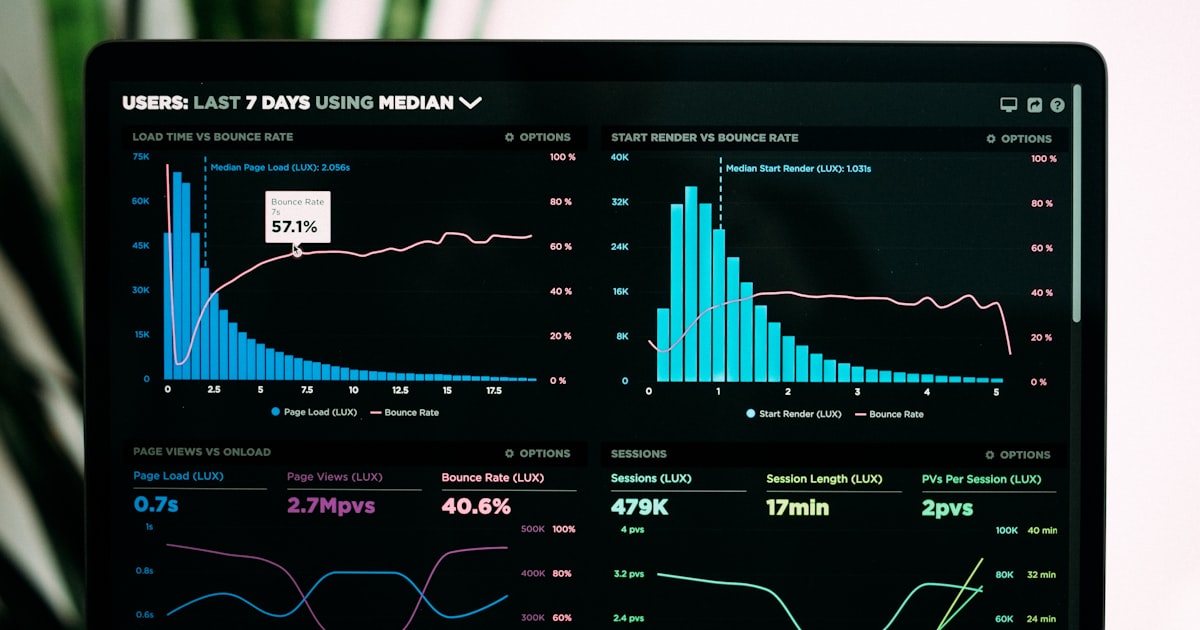
In June 2021, Google rolled out its Page Experience update, formally adding Core Web Vitals as ranking signals (Google Search Central, “More time, tools, and details on the page experience update”). Three specific metrics now influence where your pages appear in search results:
of mobile users abandon a page that takes more than 3 seconds to load — speed isn't a nice-to-have, it's a visitor retention threshold
Google / DoubleClick, 'The Need for Mobile Speed,' 2016 — cited on Google AdSense Help
In 2024, only 43% of websites pass all three Core Web Vitals metrics on mobile (HTTP Archive Web Almanac 2024, Performance Chapter). That means 57% of sites have at least one active performance disadvantage in Google's ranking algorithm — right now, without knowing it. The chart below shows what those individual metric pass rates look like.
Technical problems don't usually announce themselves. A broken robots.txt doesn't throw an error visitors can see. A slow LCP score doesn't appear in your CMS dashboard. You often need to look for them specifically — which is why most small business sites carry unfixed issues for months, sometimes years.
The five most common problems we find during small business site audits:
01.Slow load times from uncompressed images
A single hero image uploaded directly from a phone or camera can weigh 4–8 MB. That alone often causes an LCP failure. Compressing images before upload and converting to WebP format is the highest-leverage fix most sites can make in a single afternoon.
02.HTTP instead of HTTPS
Google added HTTPS as a ranking signal in August 2014 (Google Online Security Blog) and still uses it today. Chrome also displays a 'Not Secure' warning on HTTP pages, which erodes visitor trust before they read a single word of your content.
03.Pages missing from Google's index
A common audit finding is a site with 35 published pages but only 14 in Google's index. Old redirects, accidental noindex tags, and orphaned URLs that no other page links to are usually the cause — none of which surface without opening Search Console.
04.Duplicate content from URL variants
www vs. non-www, HTTP vs. HTTPS, trailing slashes — each variation can register as a separate URL in Google's eyes. Without canonical tags or proper redirects, this splits your ranking signals across multiple versions of the same page.
05.No structured data on service pages
Schema markup (LocalBusiness, Service, FAQPage) tells Google what your pages are about and can unlock rich results — FAQ dropdowns, review stars, breadcrumbs — in search. In 2024, only 41% of pages use JSON-LD, Google's preferred format (HTTP Archive Web Almanac 2024). Sites without it are leaving those enhancements unclaimed.
Working with service businesses at Studio Nosa, the most consistent audit surprise is how many indexation gaps exist without any visible symptom. A site looks fine — pages load, the design is clean — but a third of the content is invisible to Google. No amount of new content fixes a page that Google doesn't know exists.
Not every technical problem carries equal weight. When we scope a technical audit for a new client, we work through this priority order:
01.Index coverage
Open Google Search Console and check the Index Coverage report. Every 'Excluded' page that should be ranking is invisible to potential customers. Fix broken redirects, remove accidental noindex tags, and make sure your XML sitemap is submitted. This is free, and it often reveals months of lost opportunity in a single report.
02.HTTPS if you're still on HTTP
SSL certificates are free through Let's Encrypt and included with every modern hosting platform. The migration takes an afternoon. It removes a known ranking disadvantage, eliminates Chrome's 'Not Secure' warning, and signals basic trustworthiness to both Google and every visitor who lands on your site.
03.Image optimization
Compress images before uploading using a free tool like Squoosh. Convert files to WebP format. Set explicit width and height attributes on every image so the browser reserves layout space during load — this directly reduces CLS. These three steps alone often move a failing Core Web Vitals score to passing without any other changes.
04.Schema markup on key pages
Add LocalBusiness schema to your homepage, Service schema to each service page, and FAQPage schema to any FAQ content on the site. This is low-risk markup that helps Google understand what your pages are about and can improve how they appear in search results — without touching your design or copy.

If you're not sure where your site stands on any of these, our web design and SEO services include a full technical audit in every engagement. We identify these issues and fix them as part of the build — not as a separate line item billed after launch.
Not sure what's holding your site back?
We audit technical performance as part of every project — and show you exactly what we find before you commit.
View Our Services →Question
Is technical SEO a one-time fix or ongoing maintenance?
Technical SEO starts with an audit and a focused set of fixes, but it needs periodic upkeep. Google updates its ranking signals, CMS updates can break site structure, and new pages introduce new issues. Re-auditing once a year catches regressions before they suppress rankings for months. In 2024, 57% of sites still fail at least one Core Web Vitals metric on mobile (HTTP Archive Web Almanac 2024) — which shows how quickly performance gaps re-emerge.
Question
Do I need a developer to fix technical SEO issues?
Some fixes — enabling HTTPS, compressing images, adding schema markup through a CMS plugin — don't require development skills. Others, like resolving crawl architecture problems, eliminating canonical URL conflicts, or improving server response times, typically need someone with technical knowledge. An agency that handles both design and technical performance is usually the most efficient path for businesses without an in-house developer.
Question
How long does it take to see ranking improvements after technical SEO fixes?
Google recrawls most small business sites within a few days to a few weeks. HTTPS migration and indexation fixes tend to show results fastest — sometimes within days of Google picking up the changes. Core Web Vitals improvements typically affect rankings within 1–4 weeks of Google recrawling the updated pages. The effect compounds: fixing a crawl error unlocks a page's content-based ranking signals that couldn't fire before.
Question
What is the difference between technical SEO and on-page SEO?
On-page SEO focuses on what your content says — keywords, headings, meta descriptions, and how well each page answers a search query. Technical SEO focuses on how your site is built — whether Google can access it, how fast it loads, and whether it signals trustworthiness. Both matter and they compound each other: technical SEO creates the conditions for content to rank; on-page SEO does the convincing once searchers arrive.
Technical SEO isn't the most visible part of search optimization. No client meeting starts with a discussion of canonical URL architecture or LCP thresholds. But these signals determine whether Google can actually rank what you publish — and right now, 57% of sites fail at least one Core Web Vitals metric on mobile. That's a large share of the market with a performance-based ceiling on their rankings.
A half-day audit of your index coverage, page speed, HTTPS status, and schema markup will surface more fixable opportunities than most businesses expect. It's the most direct path to faster ranking gains — not by adding new content, but by making existing content finally count. If you want to know exactly where your site stands, that's where we start.
Sources
Google Search Central, “More time, tools, and details on the page experience update,” April 2021 (rollout June–August 2021), retrieved 2026-05-24, developers.google.com
Google Search Central, “Mobile-first indexing has landed,” October 2023, retrieved 2026-05-24, developers.google.com
Google Online Security Blog, “HTTPS as a ranking signal,” August 7, 2014, security.googleblog.com
Google / DoubleClick, “The Need for Mobile Speed,” 2016, via Google AdSense Help, support.google.com
Google / SOASTA, “Find Out How You Stack Up to New Industry Benchmarks for Mobile Page Speed,” Think with Google, February 2018, business.google.com
HTTP Archive, “Web Almanac 2024: Performance Chapter,” November 11, 2024, almanac.httparchive.org
HTTP Archive, “Web Almanac 2024: Structured Data Chapter,” November 11, 2024, almanac.httparchive.org
web.dev, “Web Vitals,” retrieved 2026-05-24, web.dev